
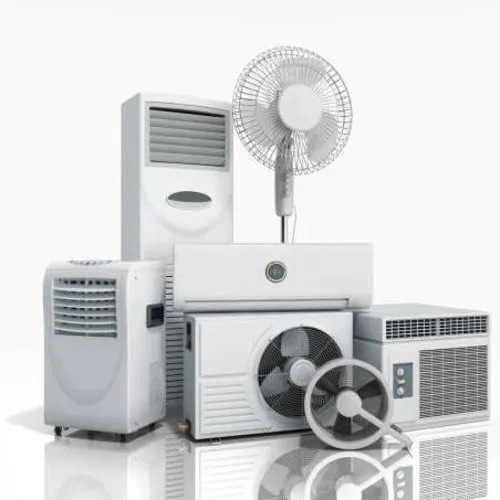
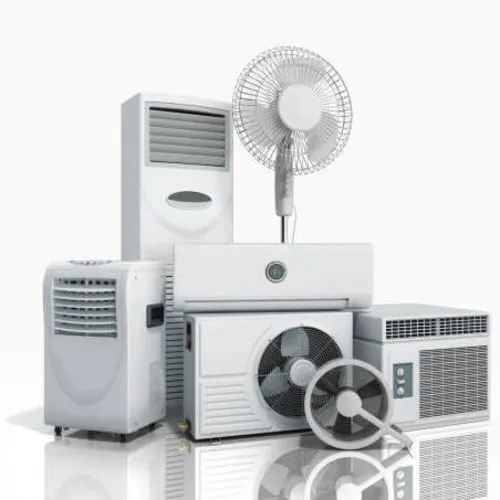
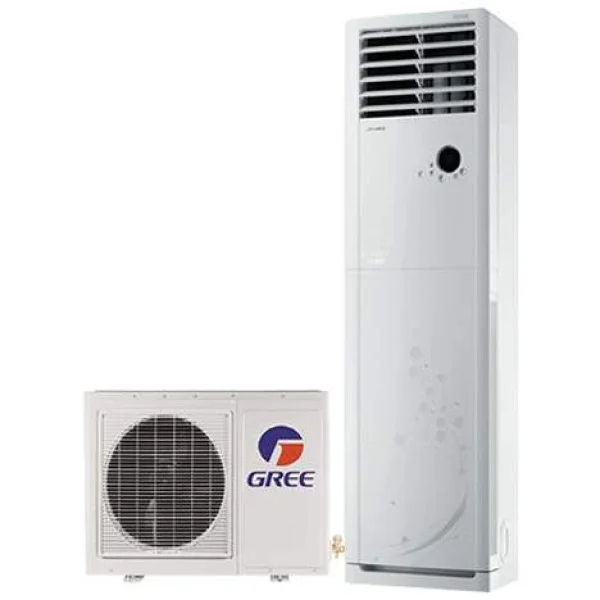
An air conditioner (AC) is a household electrical appliance designed to regulate indoor temperature, humidity, and air quality, creating a comfortable living environment. It achieves this by removing heat from the interior of a room or building and expelling it outside, thereby cooling the indoor air.
Types of Air Conditioners:
- Central air conditioners: These cool an entire home through a network of ducts that distribute cool air throughout the house.
- Window air conditioners: These are standalone units that are installed in a window frame and cool a single room.
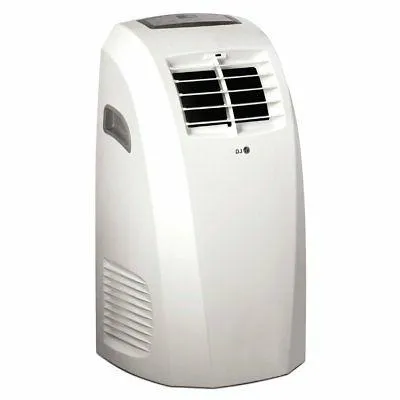
- Portable air conditioners: These are freestanding units that can be moved from room to room for targeted cooling.
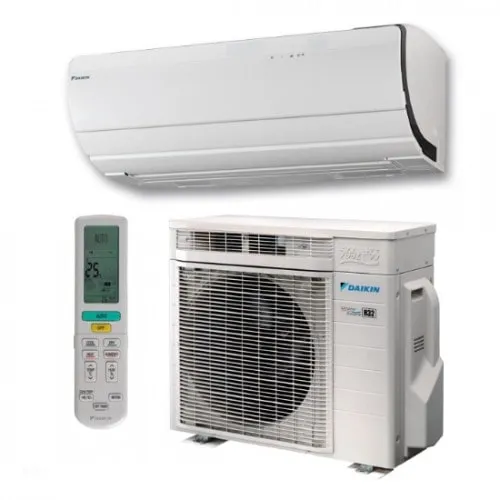
- Split-system air conditioners: Similar to central air conditioners but have two separate units: an indoor unit (evaporator) and an outdoor unit (condenser).
Importance in Households:
- Comfort: Maintains a comfortable indoor temperature, particularly during hot weather.
- Health: Improves air quality by filtering out pollutants and reducing humidity, which can alleviate allergies and respiratory issues.
- Productivity: Creates a conducive environment for work and daily activities by preventing overheating and ensuring consistent air circulation.
- Protects Home Interiors: Helps preserve furniture, electronics, and other household items by controlling humidity levels.