
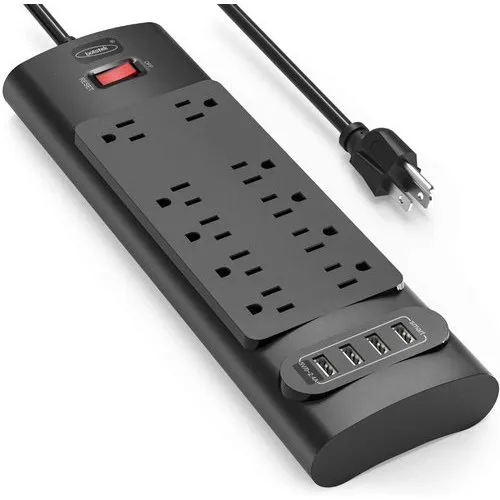
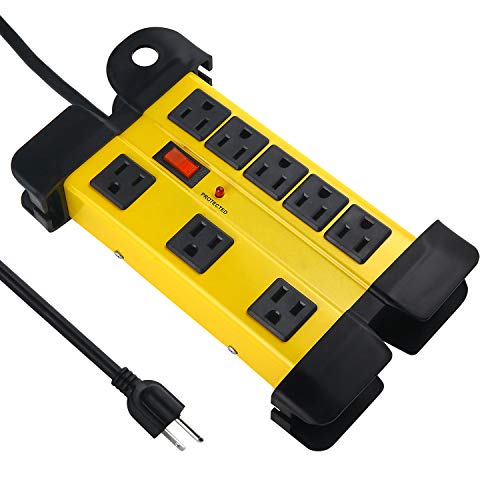
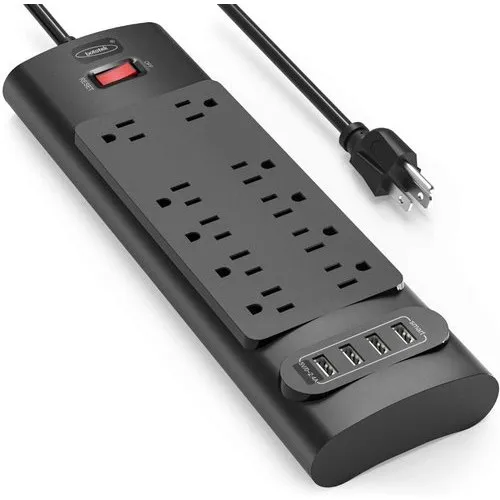
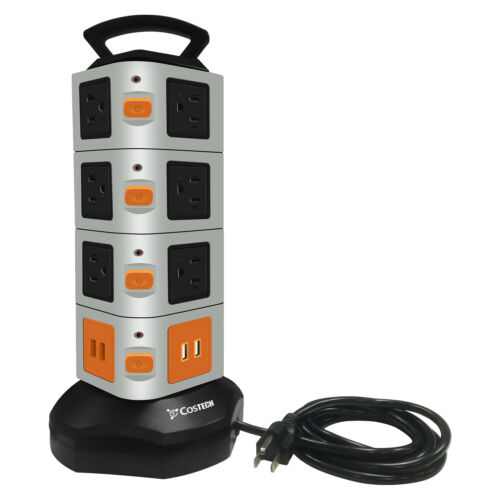
power strip is an extension block that provides multiple outlets from a single wall socket.It Provides convenient access to outlets in hard-to-reach places and offers no protection against electrical surges or spikes. It is suitable for low-risk environments where electrical disturbances are minimal. It typically consists of:
- Multiple Outlets: Allows several devices to be plugged in simultaneously.
- On/Off Switch: A switch to control the power supply to all connected devices.
- Cord Length: Varies in length to provide flexibility in placement.
A surge protector, also known as a surge suppressor, includes the basic features of a power strip but with added protection against power surges and spikes.It Uses components like Metal Oxide Varistors (MOVs) to absorb excess voltage and protect connected devices. The voltage level at which the surge protector will start to conduct electricity to protect connected devices.
Key Differences
- Protection Level: Power strips do not offer protection against surges, while surge protectors do.
- Usage: Power strips are suitable for basic extension needs, whereas surge protectors are necessary for protecting valuable and sensitive electronic equipment.
- Cost: Surge protectors are generally more expensive than power strips due to their additional protective components.
Choosing the Right Accessory
- For Basic Use: If you simply need more outlets and are not concerned about power surges, a power strip is adequate.
- For Sensitive Electronics: If you are plugging in computers, monitors, or other valuable electronics, a surge protector is a better choice to prevent damage from electrical surges.